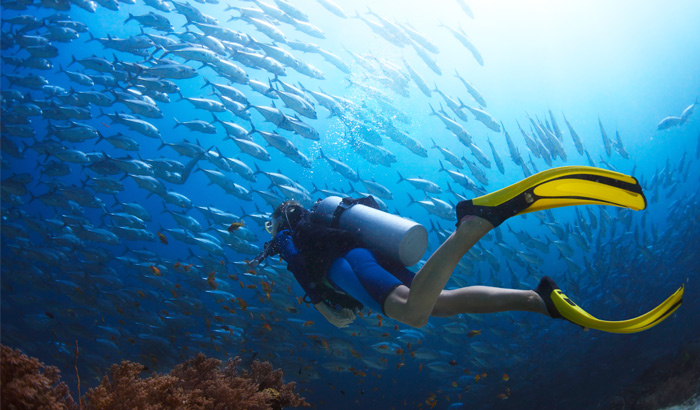
Adventure Begins Where Comfort Zones End
Human nature inherently gravitates toward safety, predictability, and routine. Psychologists often define the comfort zone as a behavioral state where a person operates in an anxiety-neutral condition, using a steady set of behaviors to deliver a consistent level of performance, usually without a sense of risk. While this state provides essential mental rest and emotional stability, it can also become a cage that stifles personal growth, creativity, and the discovery of our true potential.
True adventure is not merely about scaling dangerous peaks or jumping out of airplanes. It is a psychological framework that begins the exact moment you step across the boundary of what is familiar and predictable. When you deliberately invite uncertainty and challenge into your life, you initiate a profound process of neurobiological and emotional transformation.
The Science of the Comfort Zone and Beyond
To understand why adventure requires leaving familiarity behind, it helps to look at the human brain. Our ancestors survived by identifying patterns and avoiding the unknown. The brain is essentially a prediction machine designed to conserve energy by creating routines. When you stay within your comfort zone, your brain operates on autopilot, using minimal cognitive resources.
The Role of Optimal Anxiety
In the early twentieth century, psychologists Robert Yerkes and John Dodson discovered that a state of relative comfort creates a steady level of performance. However, in order to maximize performance and catalyze deep learning, humans need a state of relative anxiety, a space where stress levels are slightly higher than normal.
This space is often referred to as the zone of optimal anxiety. When you venture just beyond your normal boundaries, your brain releases dopamine and norepinephrine. This chemical cocktail heightens your focus, sharpens your senses, and enhances your ability to process and retain new information.
Neuroplasticity and the Unfamiliar
Every time you experience something genuinely new, whether it is navigating a foreign city where you do not speak the language or learning a complex new physical skill, your brain forms new neural pathways. This ability of the brain to reorganize itself by forming new neural connections throughout life is called neuroplasticity. Staying inside a rigid routine causes these pathways to remain fixed, while stepping into the unknown keeps the mind agile, adaptable, and resilient against cognitive decline.
Redefining Adventure in Daily Life
Many people reject the idea of adventure because they associate it with extreme sports or expensive global expeditions. This narrow definition creates a barrier to entry, leaving many individuals stuck in stagnant routines. In reality, adventure is accessible to anyone willing to alter their daily perspective.
Micro-Adventures and Everyday Risks
An adventure can be scaled to fit any lifestyle or budget. The concept of the micro-adventure involves taking small, deliberate risks within your local environment. These minor disruptions break the autopilot cycle and force you to engage dynamically with the world. Examples of accessible everyday adventures include:
-
Commuting to work using an entirely unfamiliar route without relying on a GPS device
-
Sampling foods from a culture whose flavor profiles and ingredients you have never experienced
-
Striking up a conversation with a stranger in a public space, practicing the vulnerable art of spontaneous connection
-
Saying yes to a professional assignment or social invitation that you would normally decline out of self-doubt
Intellectual and Creative Risk-Taking
Adventure can also be an internal pursuit. Exposing yourself to ideas, philosophies, and viewpoints that contradict your current worldview is a profound form of exploration. It requires intellectual courage to sit with the discomfort of having your core beliefs challenged. Similarly, starting a creative project, such as writing a manuscript, painting, or learning an instrument, requires you to face the vulnerability of potential failure, which is the very essence of an adventurous spirit.
The Psychological Rewards of Embracing Uncertainty
When you consistently choose to operate at the edge of your capabilities, you fundamentally alter your relationship with fear and discomfort. The rewards of this practice extend far beyond the immediate thrill of the experience itself.
The Construction of Self-Efficacy
Psychologist Albert Bandura introduced the concept of self-efficacy, which is an individual’s belief in their own capability to execute behaviors necessary to produce specific performance attainments. You cannot think your way into self-efficacy; you must build it through tangible evidence.
When you step out of your comfort zone and successfully navigate a challenging situation, you provide your psyche with proof of your own resilience. The next time you face an unexpected crisis in your career or personal life, you will look back at your past adventures as evidence that you are fully capable of handling chaos.
The Expansion of the Comfort Zone Itself
An interesting paradox occurs when you routinely venture into the unknown: your comfort zone actually expands. What once caused paralyzing anxiety becomes normal and manageable. By pushing your boundaries outward, you create a larger, richer space in which you can operate freely. A person who expands their boundaries regularly finds that the world becomes less intimidating, leading to a profound sense of personal freedom and peace.
Overcoming the Paralysis of Perfectionism
The greatest barrier to embarking on a new adventure is often the fear of looking foolish or making mistakes. Modern society places a heavy premium on immediate expertise and curated perfection, which directly discourages people from trying things they are not already good at.
Embracing the Beginner’s Mindset
To find adventure, you must give yourself permission to be clumsy, confused, and imperfect. In Eastern philosophies, this is known as the beginner’s mind, an attitude of openness, eagerness, and a lack of preconceptions when studying a subject.
When you accept that discomfort and awkwardness are simply the toll you pay to enter the realm of growth, the fear of judgment begins to lose its power over your choices. Failure ceases to be an identity and instead becomes valuable data that guides your next attempt.
Shifting from Goal to Process
True adventurers derive their fulfillment from the process of navigation rather than the arrival at a destination. If you only measure the success of an endeavor by its perfect execution, you miss the transformative lessons embedded in the struggle. The missed train, the sudden rainstorm during a hike, or the confusing miscommunication in a foreign marketplace are often the exact moments where true adventure resides, testing your ingenuity and revealing your hidden strengths.
Frequently Asked Questions
What is the psychological difference between healthy risk-taking and dangerous recklessness?
Healthy risk-taking involves calculated actions where the potential for personal, intellectual, or emotional growth outweighs the managed dangers, and safety precautions are respected. Recklessness, on the other hand, ignores reality, lacks preparation, and exposes an individual or others to severe harm without any underlying purpose or developmental benefit.
How can someone with high baseline anxiety safely step out of their comfort zone?
Individuals with high baseline anxiety should utilize a process called systematic desensitization. Instead of making massive, overwhelming changes, they should alter their routine in tiny, controlled increments. For example, if traveling alone causes severe panic, start by eating alone at a local restaurant, then progress to a solo day trip to a nearby town before attempting an international voyage.
Why does staying in a comfortable routine sometimes cause deep feelings of fatigue?
Staying permanently within a comfort zone leads to a lack of cognitive and emotional stimulation. When the brain is never challenged to learn or adapt, dopamine production drops, which can manifest as feelings of stagnation, boredom, chronic low energy, and mental fatigue. Challenging oneself actually re-energizes the mind.
How do I maintain an adventurous mindset when my current financial situation restricts travel?
Adventure is an internal disposition, not a geographic location. You can cultivate an adventurous mindset for free by changing how you interact with your immediate surroundings. Learn a new language via free community resources, volunteer for a local cause that exposes you to different walks of life, or explore local nature reserves on foot.
Can a person ever spend too much time outside of their comfort zone?
Yes. Operating continuously in a high-stress, unpredictable environment without periods of recovery can lead to chronic burnout, physical exhaustion, and emotional dysregulation. For optimal health and sustainable personal growth, individuals must cycle between periods of adventurous exploration and periods of rest within a safe, comforting environment.
How do I deal with friends or family members who discourage me from taking new risks?
When you begin to change your behavior and step away from your routine, it can hold up a mirror to the people around you, making them uncomfortable with their own stagnation. Address their concerns with calm validation, explaining that your choices are driven by a personal need for growth and learning rather than a rejection of them or their lifestyle.